Kelly Latimore | Iconography as Resistance

A Weapon of Annihilation Flies Over Montpelier
Note: posts by individual GMDSA members do not necessarily reflect the views of the broader membership or of its leadership and should not be regarded as official statements by the chapter.
GMDSA Co-Chair Joe Moore on the recent B-2 flyover. Photo Credit: Northrop Grumman/U.S. Air Force
On the afternoon of Saturday, September 20, a B-2 “Spirit” stealth bomber flew low over Montpelier on its way to Norwich University. The 2 p.m. flyover was scheduled to coincide with the kickoff of Norwich’s homecoming football game.
The B-2 is a heavy bomber designed to carry a large payload, including up to sixteen 2,400 pound B83 nuclear weapons - each one with a potential yield 80 times that of the Hiroshima bomb. At about $2 billion per plane, the B-2 is the most expensive military aircraft ever produced. In terms of both cost and destructive capacity, the F-35 pales in comparison.
I happened to be standing in the parking lot behind Montpelier’s Christ Episcopal Church when I heard the low roar of the B-2 overhead. It was a terrifying sight to behold from directly below. Its unique angular profile makes it immediately recognizable as a nuclear-capable stealth bomber. With only 19 in existence, the B-2 is a rare sight in most places, not to mention the skies over Vermont’s capital.
A deep sense of unease at finding myself directly below a weapon of mass annihilation quickly turned to anger. At that moment, I was surrounded by the tents and canopies of Montpelier’s unhoused population. Dozens of Vermonters were forced to seek refuge in the Church parking lot following the end of the state's motel housing program on July 1 and Montpelier City Council’s ongoing ban on camping in “high sensitivity areas.” The juxtaposition of the $2 billion B-2 flying low over a cluster of makeshift shelters erected on parking lot asphalt could not have been more stark.
This one plane alone could have paid for the construction of 10-20,000 additional units of housing – not to mention clinics, schools, childcare centers, and other socially useful infrastructure. At $2 billion, one B-2 represents just under one-quarter of Vermont’s entire state budget. Its presence in the skies over our communities is both an affront and a timely reminder that the existence of poverty and homelessness in America – the wealthiest county in the history of the world – is not an inevitability. It is a social choice.
While gratuitous displays of military power have become commonplace at U.S. sporting events, we should remember that those machines that inspire feelings of awe and pride in many Americans are weapons of mass destruction that inspire terror in most other places around the world. For the thousands of refugee families who have resettled in Vermont after fleeing wars abroad – including U.S.-launched wars – low-flying bombers are not associated with patriotic pageantry. They are associated with death and devastation.
Norwich University is a private military college, but its leaders should consider its responsibility to the community and region in which it is embedded. Football is enjoyable on its own. The University doesn’t need to subject Washington County residents to the presence of weapons of annihilation for the purpose of “entertainment”.
Angola, Apartheid and “Our Type of National Liberation”
RVDSA Candidates Defeated in Northampton Primary

Response to the mobilization of national guard troops in Memphis
The Memphis-Midsouth Democratic Socialists of America stands in opposition to the military occupation of our city. We reject the false claims by the Trump regime and Tennessee officials that deploying troops will do anything to “stop crime” in Memphis.
Genuine public safety requires an economy and city for all people. Memphians deserve institutions we control, the wealth we produce, housing, universal healthcare, mutual aid, and youth services – and we don’t get that from a police state. This government has no real interest in our public safety. Despite reporting that crime is at a historic low in the city, Trump wants to escalate violence and protect the wealth of the billionaires like Elon Musk, who poison and exploit our city for their own gain.
This latest move is yet another attempt by a racist regime to punish a majority Black working-class city. It is an escalation of their targeting of immigrants, unhoused people, queer people, workers standing up for their rights, and many fighting for their community. It is a continuation of their assault on free speech in criminalizing opponents to the genocide in Palestine. Sending federalized troops into Memphis under these pretenses is lawless, unjustifiable, violates our freedoms, and is fundamentally at odds with the US Constitution.
Across this country, we have witnessed ICE (already with support from the Marines and National Guard) terrorize neighborhoods, abduct innocent people, and funnel them into private detention centers. Now, the same plan is being brought into West Tennessee, draining even more of our public dollars into private corporations like the corrupt Core Civic.
The Trump regime would tyrannize our city – we demand freedom for Memphis and its people.
The city we love is facing an armed, illegal occupation. We call upon local officials and candidates for office to take concrete actions for our protection. We must act together: We call upon Memphis to organize in unions, in communities, and at the ballot box for political change. We can protect our neighbors. We are here with organizations that have been doing this work to be on the side of the people, and we will be here with the people of Memphis through whatever comes.
In Solidarity,
Memphis-Midsouth Democratic Socialists of America
September 17, 2025
Read more at Memphis-Midsouth

Palestine Solidarity Committee Formation Proposal
Palestine Solidarity Committee Formation Proposal
At the November 8, 2025 Chapter Meeting, DSA-LA members will be debating and voting on a proposal to form an official Palestine Solidarity Committee. Members are encouraged to review Article VI, Section 5 of our Chapter Bylaws for more information on the process for forming a committee.
Provided below is the proposed Committee Platform that was ratified by 14 members in good standing at an official meeting of the time-bound Palestine Solidarity Working Group on October 15, 2025.
Amendments to Committee Platform:
Members are welcome to submit amendments to the Committee Platform by Thursday, November 6, 2025. Amendments should be submitted to the Steering Committee via email (steeringcommittee(a)dsa-la.org).
Floor Amendments can be proposed at the Chapter Meeting. Floor Amendments can be political in nature but must remain within the scope of the section being modified and relevant to the overall proposal. Floor amendments that are out of scope and not relevant to the overall proposal can and will be considered out of order by the Debate Chair. We will require Floor Amendments to be provided to the Debate Chair in a digital or written format.
Proposed Committee Platform:
Mission Statement
DSA, both nationally and locally, is committed to organizing for Palestinian liberation and has participated in ongoing mass organizing, actions, lobbying, and political education. Since Israel’s invasion of Gaza in fall, 2023, the death toll, destruction, and displacement has risen astronomically and shows no sign of slowing down. As socialists, we understand the forces of capitalism and imperialism have an interest in maintaining the violence of the state of Israel and its ongoing genocide of the Palestinian people and nation. Even now, as growing international support for Palestine places pressure on Israel to stop its genocide in Gaza, we have to reckon with complicity of American legislators and lobbists. Ending genocide and supporting Palestine’s liberation is a key international issue of our time. It is also a national one, as more and more voters are supporting democratic socialist candidates and rejecting candidates that stand for genocide, arms to Israel, and colonialism. As socialists, we also understand that our struggles are deeply interconnected- what happens to one happens to all. As we see more repression of pro Palestine protests, as activists and protestors get arrested, detained and possibly deported, as people lose jobs, it is important that we stand with workers, students and activists in solidarity. As DSA has nationally committed to the issue of liberation and arms embargo- we see it as a necessity to continue our work as a formalized committee.
This committee shall continue its work on long term campaigns such as the BDS Chevron campaign and the Labor for an Arms Embargo campaign- in coordination with the Labor Committee and the Fighting Fascism WG. It shall also respond to local and statewide legislative campaigns, such as the local Los Angeles ceasefire campaign. Further resources will go to other response based actions such as rallies and direct actions- as well as produce trainings and guidance to grow leaders.
Leadership Structure
The committee will be led and operated by two co-chairs, at least two coordinators, as well as at least one liaison from the steering committee. Leadership will be elected during the committee election period. The committee will be open to all members in good standing, and any member in good standing will be permitted to run as a candidate for the committee’s leadership positions.
Committee leadership will formulate the goals, strategy, and priorities for the working group with input from the committee. Leadership will be responsible for conducting meetings, organizing committee-decided campaigns, and liaising with DSA-LA’s branches, priority campaigns, and other committees and working groups. In addition, leadership will be responsible for identifying and supporting new leaders and bringing new members into the committee. Outside the chapter, leadership will be responsible for maintaining relationships with coalitions and other organizations.
Committee Goals
- Legislative
- Push for legislation via our socialists in office and coalition partners that condemns Israel’s genocide, divests local resources from companies that support Israel, and stigmatizes any official relationship to the government of Israel.
- Pressure officials by lobbying and mobilizing with our coalition to push legislation that reduces Israel’s ability to wage genocide and that isolates Israel on the world stage.
- Defend against bad faith resolutions or legislation that attempts to conflate anti-semitism with anti-zionism, whitewashes Israel’s continued genocide, or otherwise impinges on freedom of speech/ protesting.
- Raise public awareness and pressure by maintaining a presence at public meetings and committee hearings.
- Track AIPAC and Israel lobby spending including recipients, dollar amount, and the candidates’ actions/statements after the lobbying.
- Campaigns
The committee shall organize and participate in campaigns that bring visibility to the genocide, dismantle the mechanisms of colonialism both abroad and in our neighborhoods, render aid to Palestinians, push for a ceasefire, and build organizing capacity and coalitions.
Such examples include:
- Labor for Arms Embargo – supporting trainings, union lobbying, political education, and demonstrations that halt weapons shipments to Israel
- Chevron BDS – organizing direct actions and petitions that remove the economic incentive for corporations to operate in Israel and Palestine
- Legislative work – organizing efforts to send post cards, write letters, call, give public statements, and hold mass demonstrations to move elected officials and legislation in support of a ceasefire, or, in response to legislation that silences pro-Palestine voices and continues to send weapons to Israel
The committee shall use these campaigns:
- To build a mass movement to end the genocide and liberate the Palestinian people
- As an avenue for newer members to engage and grow within the chapter by intentionally supporting escalating levels of involvement
- Mutual Aid + Direct Action
Direct Action and Mutual Aid have historically been two of the most effective ways to build people power, form coalitions, and make tangible change. In our work thus far, the Palestine Solidarity Working Group has participated in supply drop-offs to the encampments, art builds, banner drops, speaking at various city council meetings in support of a Ceasefire, and organizing rallies and protests.
In our work going forward, the Palestine Solidarity Committee, in coordination with the Mutual Aid Committee, shall hold periodic trainings on how to safely attend an action, how to organize actions in line with chapter priorities, how to perform the role of Safety Marshal, and how to render first aid as a Street Medic. The Palestine Solidarity Committee shall continue to organize strategic direct actions for a free Palestine. And the Palestine Solidarity Committee shall join our coalition partners in acts of solidarity or direct action that furthers the Palestine Liberation.
- Coalition Building
The committee will:
- Identify new potential coalition partners.
- Build and maintain collaborative relationships with other Pro-Palestine partners that align with our political strategies and vision.
- Coordinate with coalition partners to plan and execute direct actions, create political education material, provide member trainings, etc.
- Maintain relationships with other committees and working groups within DSA-LA to coordinate overlapping priorities and struggles.
- Strive to be an active participant in campaigns and actions; supporting our coalition partners in ways more tangible than simply adding the DSA logo to their flyer.
- Communications and Political Education
- Develop a communications team that coordinates with chapter communications on social media posts to quickly respond to changes to policy, news updates, and highlight successful campaigns/ events against Israel.
- Release a biweekly email that informs the Committee’s members and the public at large on local and global updates to Palestine Solidarity organizing, while promoting local events and campaigns.
- Create printed materials such as zines, pamphlets, posters and flyers to further campaigns and outreach.
- Organize teach-ins and events with the Political Education Committee to continue to raise awareness and build coalitions/ collective power.

Get ready for cozy (and campaign!) season with MADSA
Hello Comrades,
Are you ready for fall? At MADSA, we’re kicking off cozy season with a great Wisconsin activity – apple picking! We had a summer full of outdoor fun, and we just had to squeeze in one more event before it gets too chilly. To our comrades who are looking forward to the cold, we see you and love you, and to those mourning the end of the summer sun and heat – and perhaps gazing woefully out on the lake as the sail boats are brought in for the year – we feel that too. Regardless of your feelings on the weather, we all know winter in Wisconsin can be a grey and lonely time – but not when you have a strong community and the fire of revolution in your heart! Now is a great time to start building that community ahead of the gloomy months, so make sure to stop by at least one of our three cozy, comradely socials coming up: Crafting with Comrades, Coffee with Comrades, and of course apple picking!
But wait, there’s more! The energy of summer may now be waning, but at MADSA, we aren’t slowing down for a second. Besides lovely fall and winter, there’s another season on the horizon: campaign season! The Power Mapping Committee has been hard at work on electoral plans, and we need everyone involved. At tonight’s General Meeting, we will have the opportunity to pass the charter for an Electoral Working Group to really get our electoral operation up-and-running and to continue that work in the coming months and years. We will also hear from chapter member and state rep Fran Hong and member and staffer David O on the state of Wisconsin politics and what we can be doing as a chapter to be movers and shakers in our city and state’s political scene. Come out to our Canvassing Kickoff event on September 13 to get fired up about potential upcoming city council campaigns and to talk to your neighbors in District 6 about their thoughts and feelings on local life and politics. We will start with a canvassing training, so no experience is required. Even if canvassing isn’t something you ever thought you’d do, it’s always a good time to learn a new skill, and there will be experienced comrades to help every step of the way. Also, please be sure to fill out the Membership Mapping Survey linked at the bottom of this email if you haven’t yet. A thorough survey of our members is important to assessing our internal power so we can plan our labor, electoral, and other activities most strategically.
Finally, check out our new and improved Socialism 101 – now titled Beyond the Two Party System! If you attended a Socialism 101 in the past, bring a socialism-curious or two-party-fatigued friend or coworker out and help us spread the message: workers deserve more, and socialism is the way to win it.
Solidarity forever,
Your MADSA Executive Committee
- Tue. September 9, 6:30-8:30pm: September General Membership Meeting
- Sat. September 13, 1-5:00pm: Canvassing Kickoff
- Sat. September 13, 5:30pm: Crafting with Comrades!
- Sat. September 20, 10:00am: MADSA Apple Picking Social
- Thu. September 25, 6-8:00pm: Beyond the Two Party System: A Socialist Way Forward
- Sat. September 27, 10:00am-12:00pm: Coffee with Comrades!
- Sat. October 4, 2-3:30pm: October New Member Orientation
A city-run Nectar’s – why not?
Note: posts by individual GMDSA members do not necessarily reflect the views of the broader membership or of its leadership and should not be regarded as official statements by the chapter.
After reading that Burlington’s legendary music spot Nectar’s had permanently closed, GMDSA Secretary David Wilcox wrote to Seven Days to propose municipalizing the venue. His letter, printed on 8/20/2025, is republished below.
In response to the shutdown of Nectar’s, I’d like to suggest a solution: Why not have the city government take over and run Nectar’s? There’s nothing radical or unprecedented about the City of Burlington running a popular music venue, given that it owned and operated 242 Main for 30 years. And I would argue that a venue like Nectar’s, one that’s synonymous with the general idea of what Burlington is, contributes far more to the city’s bottom line than its own financial numbers would indicate.
Without venues like Nectar’s, Burlington loses its aura as a cool, desirable place to live. And if Nectar’s has seemed like a shadow of its former self in recent years, why not try to revitalize it under new (public) ownership? Especially since the final shutdown of Nectar’s was due to a dispute with a landlord. The city has already forced the sale of one Handy property (184 Church Street) for the greater good of the community. Surely, there’s a way to make all this happen with enough political will.
I, for one, am sick and tired of passively accepting the loss of important places and services due to “the market,” which is every bit as much a human-created institution as laws and governments. The Burlington renaissance began with then-mayor Bernie Sanders (whose administration founded 242 Main) refusing to accept the market dictating that we couldn’t have nice things. If we want Burlington’s glory days to return, we need to rediscover that energy.
David Wilcox
Winooski
Madison Area DSA Stands in Solidarity with the Social Justice Center and with our Homeless Neighbors!
As part of a city-wide crackdown on our homeless neighbors, the City of Madison is unfairly targeting the Social Justice Center, demanding that the SJC removes its food pantry, public health vending machine, benches, and public art, in an attempt to drive away unhoused people who rely on the SJC and the organizations it houses for shelter, safety, healthcare, and support.
Madison Area Democratic Socialists of America recognizes the effort the Social Justice Center puts into addressing the housing crisis that this city ignores, and we stand with the SJC and all who rely on it.
There is no denying it: there is a crisis in Madison. Rents get higher and access to affordable housing gets more limited by the day, forcing more and more people from their homes. Public restrooms are not open early or late enough. Overcoming addiction is nearly impossible when one’s basic needs for survival are not met. Each of these problems is a rung in the ladder of capitalist oppression, which forces the working class into worse and worse conditions until they have nowhere left to go.
The city’s approach to this crisis is unjust and unhelpful. We cannot disappear the unhoused population. We must house them. We must give them safety, security, and support. They are our neighbors, community members, and constituents of the politicians who claim to represent us. Any one of us could be a layoff or medical emergency away from joining them. This crisis is a reminder to the rest of the working class that the ruling class will turn its back on anyone who isn’t making them profits.
The Beacon, Madison’s primary day shelter, is beyond capacity, so people look for shelter in other parts of the city. The city’s proposed new men’s shelter won’t be ready until next year, and will only have 250 beds – not nearly enough to meet the well-documented need.
But instead of fully funding and expanding the sorely needed homeless services and meaningfully addressing the housing crisis that makes them necessary, the city is cracking down on neighbors helping neighbors – by increasing police presence at and making punitive demands of the Social Justice Center, by threatening to close down the Dairy Drive campground with winter just around the corner, and by sweeping the encampment at the Wisconsin Veterans’ Museum.
“Solving” homelessness with incarceration is more expensive per person than harm reduction centers and housing first policies, and only perpetuates the cycle.
As community members, it is our responsibility to provide what the city will not, and the Social Justice Center aims to do exactly that. We also have to fight for a just future in which everyone has what they need. MADSA stands in solidarity with the Social Justice Center, and calls upon the Madison Common Council, Madison Mayor Satya Rhodes-Conway, and the Dane County Board to do right by our neighbors:
1. Stop targeting the SJC for stepping up where the city has failed.
2. Continue to fund the Dairy Drive campsite, a crucial transition program.
3. Support the Dane County Homeless Justice Initiative’s demands to fully fund homeless support services.
4. Cure the root cause of the homelessness crisis by building affordable, desirable, and dignified public housing where our neighbors can thrive, not just survive!
The Vermont Socialist - GMDSA newsletter (8/30/25): Storm the fort
Kids in Vermont have gone back to school. On their first day after the summer vacation, Windham County students may have expected to say hello again to their usual bus drivers, but that'll have to wait. Travel Kuz, the supervisory union's transportation contractor, has locked out members of Teamsters Local 597 and brought in scabs.
Bus drivers and monitors responded to their bosses' refusal to bargain by organizing pickets. On Wednesday, Travel Kuz sent them a cease-and-desist letter, calling a demonstration at Brattleboro Union High School "unlawful" and "unsafe." Local law enforcement disagreed.
The Teamsters want Windham Southeast superintendent Mark Speno to pressure Travel Kuz to end the lockout and have encouraged allies to contact him. Tell Speno (802-254-3730, mspeno@wsesdvt.org) to support the transportation workers' fight for fair wages and benefits. You can even attend the next school board meeting.
Follow Local 597's Facebook page for the latest updates. An injury to one is an injury to all.
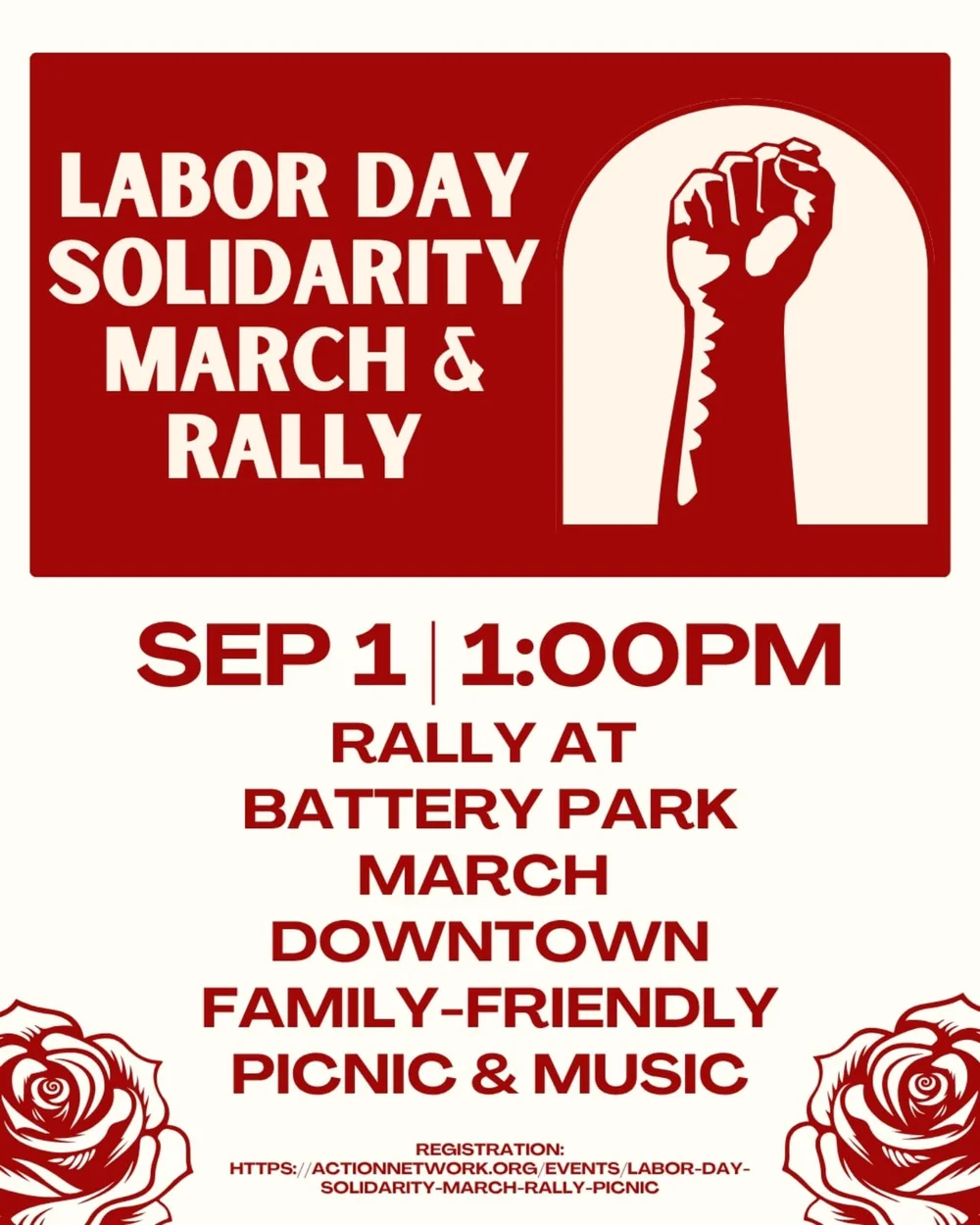
And speaking of the Teamsters, you may see some of them in Burlington at the Labor Day Solidarity March, Rally & Picnic. Dozens of unions and activist organizations (including Green Mountain DSA) have endorsed the event.
You can help us get ready by joining us at Migrant Justice (179 S. Winooski Ave., Burlington) today (8/30) at 4 p.m. to create art for the rally. Feel free to bring materials.
We expect a massive turnout for the rally itself. Meet us at Battery Park at 1 p.m. on Monday, Sept 1. Labor Day belongs to workers.
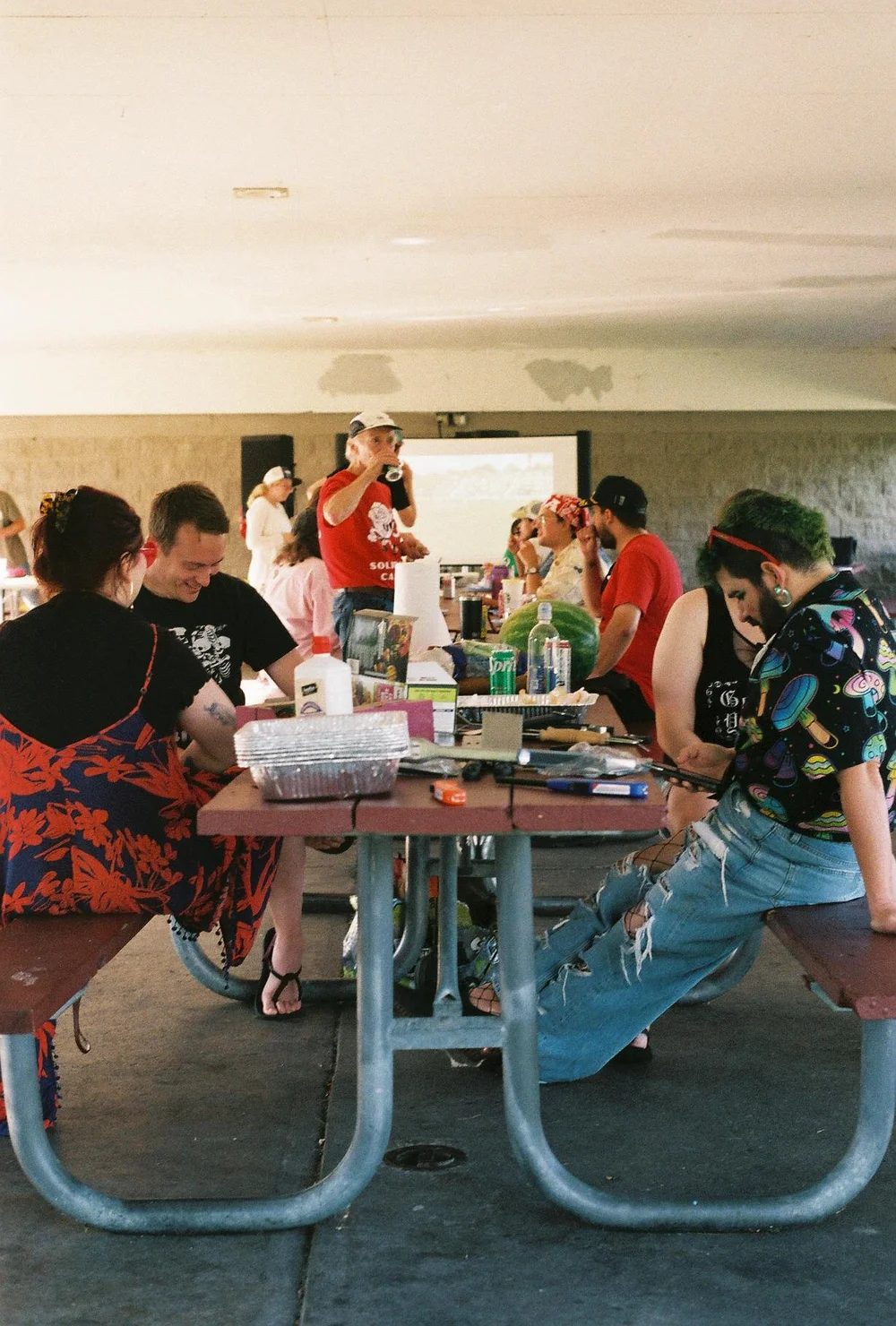
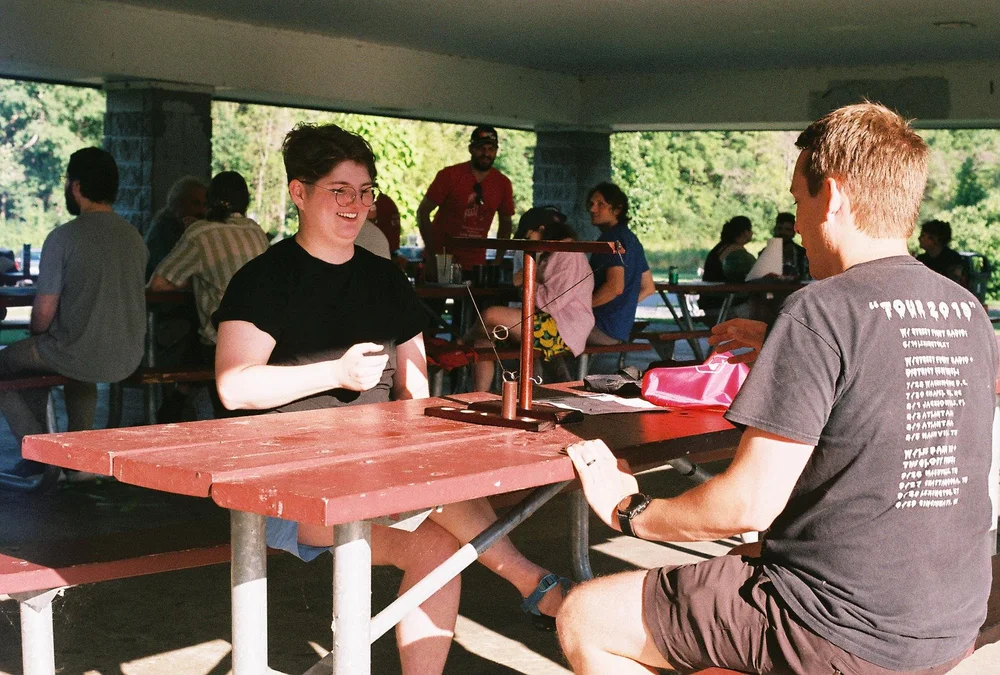
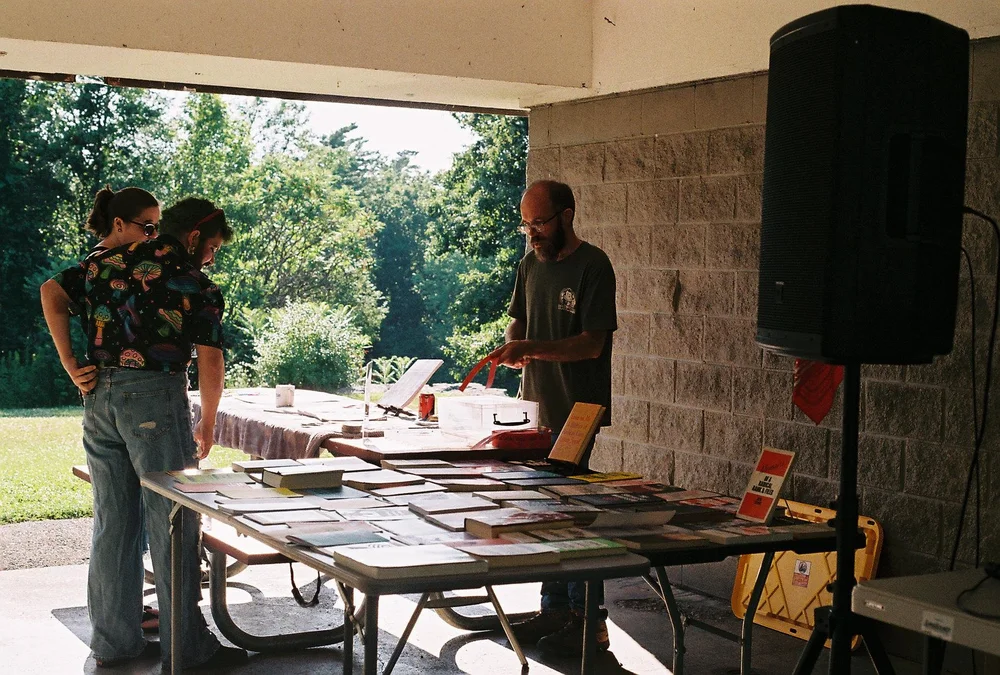
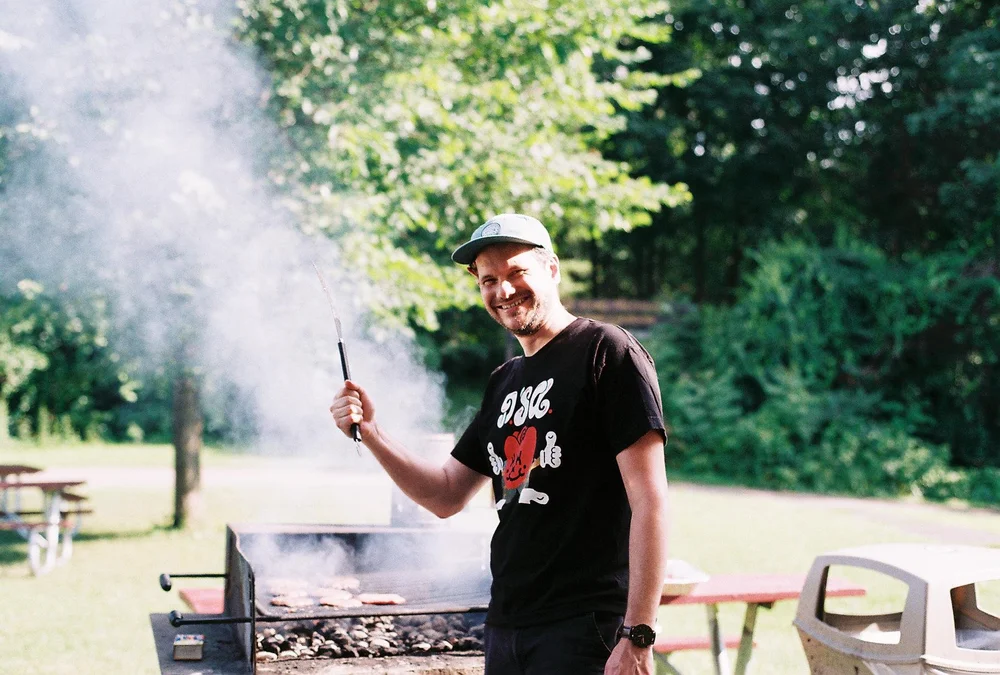
Unfortunately, as the schoolkids already know, Labor Day also means that summer is over. Thanks for the memories – here are a few shots from our chapter's barbecue at Oakledge Park.
GMDSA MEETINGS & EVENTS
🚲 In order to avoid a conflict with the Labor Day rally, GMDSA's Urbanism Committee will meet on Tuesday, Sept. 2, at 6 p.m. on Zoom.
👋 Find out how you can help our Membership Committee improve recruitment and involvement in our chapter on Thursday, Sept. 4, and Tuesday, Sept. 23, at 6 p.m. on Zoom.
🧑🏭 Our Labor Committee will hold its next meeting on Monday, Sept. 8, at 6 p.m. on Zoom.
🔨 Talk about your job and learn about shop-floor organizing from peers at Workers' Circle (co-hosted by the Green Mountain IWW) on the second and fourth Wednesdays of each month, including Sept. 10, at 6 p.m. at Migrant Justice (179 S. Winooski Ave., Burlington).
🍿 Socialist Film Club will host another backyard screening in Burlington on Friday, Sept. 12, at 7 p.m. Please email us for more information if you're interested.
🗳️ The next meeting of our Electoral Committee will take place on Wednesday, Sept. 17, at 6 p.m. on Zoom.
🤝 GMDSA's East Branch and West Branch will come together for a general meeting on Saturday, Sept. 20, at 11 a.m. at Montpelier's Christ Episcopal Church (64 State St.), with an optional orientation for newcomers at 10 a.m.
🍉 Our Palestine Solidarity Committee will meet on Monday, Sept. 29, at 7 p.m. on Zoom.
STATE & LOCAL NEWS
📰 GMDSA-endorsed state senator Tanya Vyhovsky (Chittenden-Central) toured Ukraine, meeting with activists, politicians, students, and trade unionists.
📰 Protesting the Trump administration, Vermonters and Quebecois gathered at the US-Canada line in an expression of international solidarity.
COMMUNITY FLYERS